

Wednesday 30 September 2026, Berlin
9am – 2pm | SCHMIEDE – EUREF Campus
DE-10829 Berlin
Join a community of civic innovators, technologists, policymakers and educators for the second gathering of The Civic Toolkit series.
We’ll open with a debate to surface the tensions and trade-offs around AI's role in European democracy. From there, the day is yours to shape. Working groups will draw on your own experience and expertise to put ideas to the test around the day's three themes:
- Youth participation and civic agency: How can AI increase youth engagement and civic participation, and what do we need to be wary of?
- Disinformation as a civic challenge: AI is reshaping the disinformation landscape – what does it take to build resilience and critical awareness?
- Hyperlocalisation and democratic renewal: Can empowering decision-making at the neighbourhood level revitalise democracy, or does it sideline communities from the bigger decisions that shape their lives?
Save your spot by completing the form below.
Speakers and agenda below.
.webp)
Civic engagement feels increasingly fragile, yet it remains one of our most powerful tools for collective progress: strengthening democratic culture and enabling shared problem-solving & accountability. The Conduit Foundation is mobilising an urgent conversation around democratic renewal; and artificial intelligence’s place at the heart of this moment.
While AI can deepen polarisation and entrench bias, it can also expand participation, strengthen transparency, and reconnect citizens with decision-making. The question is not whether technology will shape our democratic future, but how. That’s why citizens need a blueprint to play an active role.
Together with our partners, The Conduit Foundation is building The Civic Toolkit: a non-partisan initiative designed to strengthen the discussion around democratic culture through structured learning spaces that explore civic innovation, digital resilience and the responsible role for AI in public life.
Agenda
Registration
Welcome: Robyn Bennett & Paul van Zyl
Opening Keynote: Bruno Giussani
Bruno Giussani, author and podcaster, and former Global Curator of TED, introduces the day's central tension through his concept of "technological resistance" – a call to stay lucid and engaged with the systems shaping our world, rather than simply accepting or rejecting them.
The Debate: "This house believes AI will do more for European democracy in the next decade than any institutional reform”
Debating whether AI will do more for European democracy in the next decade than any institutional reform, with Maxim Nitsche, Julia Ebner, Alicia Combaz, Joe Litobarski, Dimitris Dimitriadis and Ina Remmers – six leading voices on tech, disinformation and civic renewal argue it out: is AI poison or medicine for democracy?
Comfort Break
The Studio
The debate surfaced the issues – now it's your turn to work through them. In small working groups guided by our speakers and expert facilitators, you'll bring your own experience to the table, testing ideas against real examples: how can we ensure AI opens new doors for young civic actors and citizens more broadly, rather than deepening the gap between institutions and individuals? What would it take to build AI-literate communities equipped to hold shared reality together, alongside stronger detection and enforcement? And how can hyperlocalisation become genuine democratic renewal, rather than a way of managing communities out of the decisions that affect them?
By the end of the session, each group will have one proposal ready to bring back to the room – something they believe could be tried within six months.
Comfort Break & Regroup
Report Back & Open Mic
Fishbowl session, allowing facilitators, debate speakers and participants to feedback to the wider room on their reflections and proposals.
Closing Keynote: Josephine Ballon, CEO and Co-Founder, Hate Aid
Josephine Ballon, CEO of HateAid, closes the day by addressing the underlying question: what happens to democratic organisations when the technology they depend on is no longer theirs to control?
Final Remarks: Paul van Zyl
Next steps and a look ahead to our third gathering on 4 November.
Lunch and Networking
Informal conversations to close out the day.
Speakers & Contributors
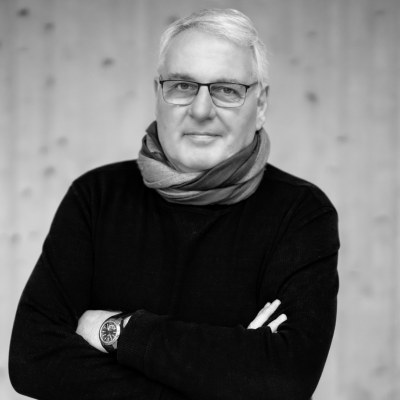
Bruno Giussani
.svg)
Bruno Giussani is a writer and podcaster. He's the author of ""Our Minds Under Siege. How to Avoid Being Manipulated in the Age of Artificial Intelligence"" (June 2026, forthcoming also in German under the title ""Der belagerte Geist"").He was for nearly 20 years the global curator and European director of TED, where he curated over one thousand TEDtalks. Previously, he was an Internet columnist for the New York Times and a writer for numerous other media across Europe; the Head of online strategy at the World Economic Forum; a JSK Fellow at Stanford University; the chairman of the Geneva International Film Festival and Forum on Human Rights. He has lectured at several universities and co-founded two Swiss technology companies, Tinet and Tinext. He lives in Switzerland.

Dimitris Dimitriadis
Dimitris Dimitriadis is a futurist and AI entrepreneur who has spent his career asking one question: what does it mean to build technology that genuinely serves humanity? Founder of Cogniveil.ai and Author of "2049 Instructions for the Futures of Humanity (2023)" and the revised edition "2049: A Manual for a Hopeful Intelligence Age (2026)", he has spoken in 74 countries and advised Fortune 500 companies and institutions ranging from the European Commission to the U.S. Department of State. For the past twelve years, he has been quietly training a personal AI model to advise his niece when he is no longer around; a reminder that the most powerful use of technology is not disruption, but the transmission of wisdom across generations.

Joe Litobarski
Joe Litobarski is a PhD researcher at Maastricht University working on the history of technology and democracy. His research explores the history of electronic democracy, cybernetics and experiments in using new communications technologies to involve citizens in democratic decision-making, from the 1960s to the emergence of the internet. Before beginning his PhD, Joe worked for over a decade in online deliberative democracy, connecting citizens with experts and policymakers through digital platforms and facilitated public dialogue. His wider interests include the democratic public sphere, AI and social media, and how new technologies can reshape the conditions for democratic participation.
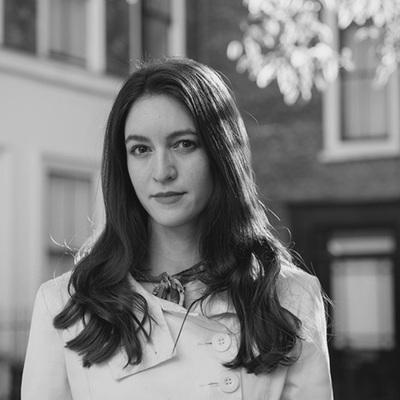
Dr Julia Ebner
Dr Julia Ebner is an international expert on online radicalisation, disinformation and threats to democracy. She leads the Violent Extremism Lab at the University of Oxford and is Co-Executive Director at the Institute for Strategic Dialogue (Berlin), where she oversees research, policy and action programmes on digital threats to democracy. She has given evidence to various governments, including on AI-fuelled disinformation, advised the intelligence community, and worked with the UN, Europol and NATO. Julia is the award-winning author of The Rage, Going Dark and Going Mainstream. She regularly writes for outlets such as The Guardian, Financial Times and Süddeutsche Zeitung, contributes to broadcast media, and delivers guest lectures and public talks at universities and schools. Julia holds a DPhil in Anthropology from the University of Oxford and has over a decade of experience working at the intersection of research, policy and practice.

Paul van Zyl
Paul served as the Executive Secretary of South Africa’s post-apartheid Truth and Reconciliation Commission. Paul also co-founded the International Centre for Transitional Justice, an organization that works in over 40 countries that have endured massive human rights violations under repression conflict. Paul is also a co-founder and CEO of Maiyet, an ethical luxury fashion brand that cultivates traditional design and culture by partnering with global artisans. Most recently, Paul co-founded The Conduit, which serves as a home for those committed to improving the world by harnessing the power of creativity and entrepreneurship. The Conduit serves as a home for a diverse community of people passionate about social change.
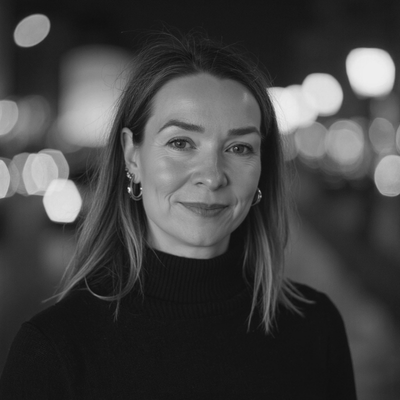
Katie McPhee
Katie McPhee is the founder of Expanded Future, where she works with organisations to put AI in the hands of more people — not fewer. Her career in technology has been shaped by a consistent thread: that tech should widen access and enable financial empowerment, not concentrate it. She spent nearly a decade at Eventbrite, building and scaling the company's European marketing operation from early-stage to IPO, and has since launched and advised multiple mission-driven startups across climate tech, the sharing economy and AI. In 2023 she co-founded Earth AI, a climate and AI hackathon series that has brought together over 1,500 practitioners. Katie is AI for Good Expert in Residence at The Conduit, where her work spans AI and democratic participation, exploring where the technology can genuinely support civic life and where it puts it at risk. She holds an MSc in Behaviour Change from UCL, where her research focused on how technology can shift behaviour toward positive social outcomes.

Anna Lob
Anna Lob works at the international nonprofit organization More in Common, at the intersection of media, public debate, and social cohesion. Her focus is on how journalism and digital platforms influence societal polarization and what role media can play in fostering a constructive debate culture. In 2024/25, she was a Fellow for International Digital Policy at the German Federal Ministry for Digital Affairs and Transport. Since 2022, she has served as a volunteer board member at D64 – Center for Digital Progress. She studied psychology, communication studies, and public policy in Freiburg, Berlin, and Austin (Texas).

Robyn Bennett
Robyn Bennett co-leads Expanding Civilizational Optionality (xCO) at Dark Matter Labs, a body of work focused on how we keep futures open in a time of degenerative volatility, weaving together systemic finance, risk intelligence, governance design and large-scale organising. A linguist and social anthropologist at heart, she comes to it from a decade in cross-sector innovation: co-building the Creative Bureaucracy Festival into a global platform for public sector transformation, and working with the African Centre for Cities, the Goethe-Institut, and the School of International Futures, among others. Based in Berlin, she co-hosts the Womxn ∞ Power community, co-writes the Substack Money, Honey?, and is an inaugural fellow of The Institutional Architecture Lab (TIAL).
.png)
Rebekah Ison
Rebekah Ison is head of partnerships and insights at the Better Politics Foundation, where she connects the people and organizations shaping political leadership. She is co-author of the “Mere Mortals” report on the mental wellbeing of politicians and the upcoming Fit to Lead report, which is the biggest study ever conducted on the wellbeing of politicians in Australia.With a background in journalism, political communications and international affairs, she has worked across Europe, including projects for the European External Action Service, as well as Asia Pacific. She began her career as a reporter covering courts, government and royal commissions for the Australian Associated Press and was later a European Journalism fellow in Berlin.At the Better Politics Foundation, she helps determine strategy, build partnerships across the political leadership ecosystem, and work to surface and share ideas that make better politics possible.

Maxim Nitsche
Maxim is a serial entrepreneur and technology innovator driven by a mission to leverage AI for good across news, education, and society.He is the co-founder of deep, a Berlin-based technology company developing deepTrust, an AI system designed to track disinformation in real time and help governments, journalists, and institutions identify manipulation before it spreads.At just 15, he co-founded MATH 42, an early AI-powered math learning app that went on to support millions of students worldwide before being acquired by Chegg in 2017.
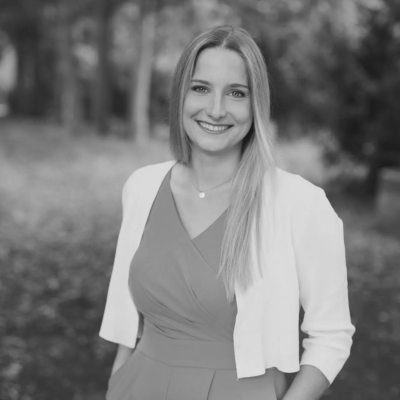
Josephine Ballon
Josephine Ballon studied law at the University of Potsdam and has been a lawyer since 2018. In November 2019, she became Head of Legal at HateAid. Since September 2023, she has been co-leading the organisation as co-executive director alongside Anna-Lena von Hodenberg. Josephine Ballon is committed to improving the legal framework for victims of digital violence – who have thus far been largely left unprotected – and to ensuring they have access to justice. Ms Ballon has been invited on multiple occasions to serve as an expert witness, including before the Legal Affairs and Digital Affairs Committees of the German Bundestag, as well as before the European Parliament, where she provided testimony on issues related to the prosecution of hate crimes on the internet, gender-based digital violence, and platform regulation. She served as a member of the first advisory board of the Digital Services Coordinator in Germany until December 2025.In December 2025, Josephine Ballon made international headlines: on 23 December, 2025, US Secretary of State Marco Rubio imposed a travel ban on her and her co-CEO, Anna-Lena von Hodenberg. Since then, both CEOs have been barred from entering the United States due to their advocacy against digital violence and in favour of platform regulation.
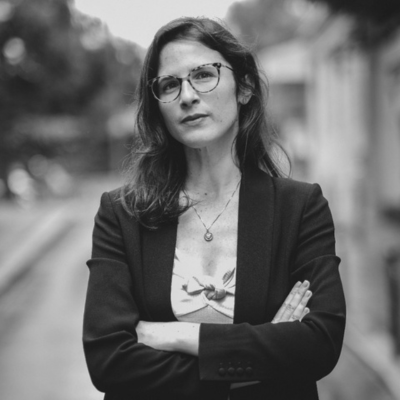
Alicia Combaz
Alicia Combaz is the Founder and CEO of Make.org, an independent organisation dedicated to driving positive societal transformation and democratic innovation. Make.org provides innovative solutions and platforms to foster alignment, rebuild trust and drive collective action, empowering public institutions, businesses and researchers to involve citizens, employees and stakeholders in co-creating solutions to today's most pressing challenges.
Prior to founding Make.org in 2016 - alongside Deezer's former CEO - Alicia spent a decade in the tech industry, building and leading teams of engineers, data scientists and product managers, and establishing France's first Growth Hacking Team at Deezer.
She was featured in the Le Point–Giverny 2021 ranking of outstanding individuals under 40, selected as a Rising Talent by the Women's Forum for the Economy & Society in 2022, and in December 2025 was awarded the title of Chevalier de l'Ordre National du Mérite by the French government.

Ina Remmers
Ina Remmers is a social entrepreneur and managing director of the Rulemapping Group. After completing her studies, she worked as a freelance brand consultant and communications strategist. In 2003, she co-founded the non-profit organisation “Junge Helden” with Claudia Kotter and other friends, which is dedicated to raising awareness about organ donation. In 2015, she launched the platform nebenan.de to strengthen community spirit in local neighbourhoods. To ensure this sense of community also works at a societal level, she founded the Rulemapping Group in 2024 and now works to simplify and speed up bureaucratic processes. For her work, she was named “Best Female Founder” at the German Startup Awards in 2020.
Looking Back: Berlin, April 2026
The first in our series of three events in Berlin to build our Civic Toolkit ensuring citizens have the power and capacity to respond to the challenges of the tech era. AI is reshaping democracy; rather than just trying to keep up, we should be directing that shift. Our programme brought together the people working at the frontlines of that shift - from civic tech to digital rights - to focus on one question: How do we defend and rebuild democratic life in the age of AI?
Agenda
Welcome and Opening
Introductions and context-setting
AI in the World: Navigating Truth, Trust & Technology
We open by zooming out: The world is being reorganised by competing powers, and AI is accelerating this in ways that democratic systems were never designed to withstand.
We trace how democracy erodes when disinformation spreads, and probe: What do we do about it - and does democracy's operating system need a fundamental update? AI does not have to be simply a risk to manage - it is a genuine opportunity to reimagine how states decide, how citizens participate, and how institutions regain legitimacy.
Networking Lunch
The Agora
In the second session, we explore what it looks like to design AI that actively protects democratic systems and show how this is already happening. We introduce AI tools that make political information more accessible and dig into what rebuilding trust in democratic institutions requires on the ground, not just the theory, and ask: How do we use AI to maximize its benefits and minimises its harms?
The Democracy Lab
This session belongs to the room. Participants break into small groups, work through specific challenges, and bring their own knowledge, experience, and concerns to the table.
Return to the Agora
The Democracy Lab findings come back to the full room in an Open Mic session. We close the day with what computer science and algorithmic design can tell us about building decision-making systems that are fair, transparent, and worthy of democratic trust.
Speakers
Ina Remmers
Ina Remmers is a social entrepreneur and managing director of the Rulemapping Group. After completing her studies, she worked as a freelance brand consultant and communications strategist. In 2003, she co-founded the non-profit organisation “Junge Helden” with Claudia Kotter and other friends, which is dedicated to raising awareness about organ donation. In 2015, she launched the platform nebenan.de to strengthen community spirit in local neighbourhoods. To ensure this sense of community also works at a societal level, she founded the Rulemapping Group in 2024 and now works to simplify and speed up bureaucratic processes. For her work, she was named “Best Female Founder” at the German Startup Awards in 2020.
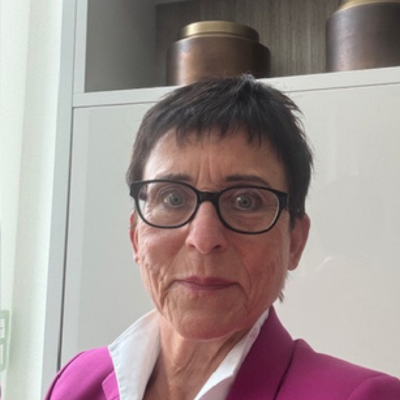
Karin Dietz
Karin Dietz began her professional career with a vocational training in the tourism sector. Her entrepreneurial focus was shaped during her stays overseas and her studies in business economics at University of Goettingen, Germany. As a tutor, adjunct professor, and trainer, she has distinguished herself through her passion for sharing knowledge. She started her own business in knowledge design and human resources development with three partners only a few years after achieving her diploma of economics at University of Goettingen. She is the cofounder and private investor of one of the very first private universities in Germany. From the background of her studies in economics her entrepreneurial background and expertise include a wide range in program innovation, further education, strategic consulting and international relations. She has worked with public institutions and companies of all sizes to help professionals and leaders develop the potentials and skills needed to meet the challenges of the future. The topics covered include e.g. Academic Educational Designs / Asia-Pacific Business Relations / Biotechnology Startups / Brand Edutainment and Brand Life Cycles / Development of Junior staff & Succession Planning / Human Resources / Internationalization / Art and Cultural Projects / Market Strategies for Medium-Sized Businesses / Marketing and Corporate Design Strategies / Legal Matters and Contract Concepts / New Work / Pricing / University of the Future. She views AI as both a challenge and an opportunity for shaping the economic and social future.
Through the early conception and implementation of conferences focused on the Asia-Pacific economic region, she has provided significant impetus to business engagement with the Far East. As a (co-)editor of practice-oriented professional publications, she has documented the experiences of German companies in this region.
As a business owner, member of supervisory boards and in management responsibility, she has been directly engaged in the full range of decisions, from strategic to process-related ones. A focus on the wide variety of interfaces within the business world has shaped the consistent commitment to innovation. As a strategic M&A decision she and her partners handed over their ownership shares of their corporate group after successfully managing it as partners and co-shareholders for around three decades in a spirit of trusted friendship. To this day, Karin remains a member of Asia-focused business associations and networks and regularly visits the Asia-Pacific region as an interested observer. She is actively involved in voluntarily supporting startups and providing career and academic guidance coaching. Based in Berlin, she today moreover promotes cultural, science and interdisciplinary exchange within a diverse network by bringing together interested parties through lecture and discussion events.

Nadim Choucair
Nadim is a strategist at Dark Matter Labs where he co-holds the learning function and runs strategic programs within NetZeroCities & the Urban Transition team. He’s also the creator and host of the Curiosity That Matters podcast. He’s from Beirut, Lebanon, and is currently based in Berlin with his partner and their 2-year old daughter.
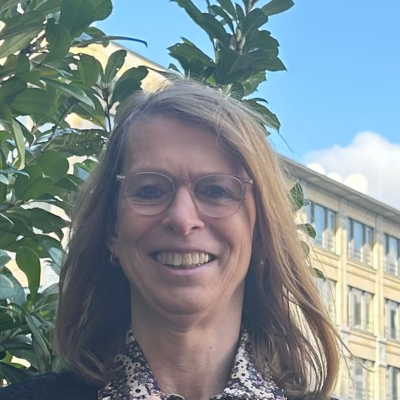
Sabine Reuss
Sabine Reuss is a leader in Marketing, Communications, and Corporate Social Responsibility with a long‑standing commitment to digital inclusion. After heading Marketing, Communications, and the CSR department at Capgemini, she now serves as Ambassador at ReDI School, where she coordinates fundraising, marketing, and partner management to expand access to digital education. Throughout her career, she has focused on building bridges between technology, business, and society to ensure that digital transformation is inclusive and opens opportunities for everyone to participate and thrive.
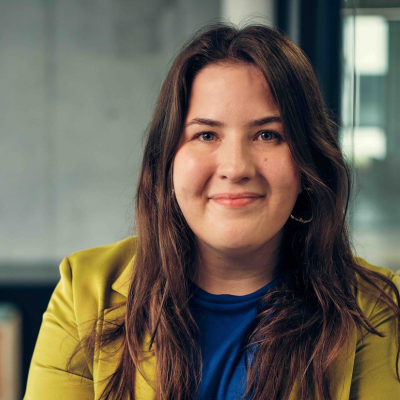
Lajla Fetic
Lajla Fetic is Head of AI Public Interest & Policy at the appliedAI Institute for Europe. She is a leading expert in public interest tech, AI governance, and digital policy, advising policymakers at the EU, national, and local levels, as well as stakeholders in business and civil society, on AI for the common good. She has advised the European Parliament and the German Bundestag on the EU AI Act and authored several studies on regulation, regulatory sandboxes and digital sovereignty. Fetic has been actively involved in supporting the implementation of innovative governance instruments in the public sector, including contributions to initiatives such as the ReguLab.
Fetic has served on advisory boards such as KI-Cockpit and previously led projects at the Bertelsmann Stiftung on public interest tech and AI ethics. She also co-led the working group on socio-technical systems for Germany’s AI standardization roadmap. A recognized speaker on the societal impact of AI, she recently gave a TEDx talk on AI and democracy and was named one of the “100 Brilliant Women in AI Ethics.” She holds a Master of Public Policy from the Hertie School in Berlin.

Matthias Spielkamp
Matthias Spielkamp is founder and executive director of AlgorithmWatch (German Award for Consumer Protection 2024, Brandenburg Freedom Award 2023, shortlist Grimme Online Award 2019, Theodor Heuss Medal 2018) and founder and president of AlgorithmWatch CH. He testified before committees of the Council of Europe, the European Parliament, the German Bundestag and other institutions on automation and AI and was a member of the advisory council to the German Digital Services Coordinator (DSC), elected by the German Bundestag, from 2024-2026, and the Global Partnership on AI (GPAI) from 2020-2022. Matthias serves on the governing boards of the German section of Reporters Without Borders and Stiftung Warentest, the advisory councils of Freudenberg Stiftung and the Whistleblower Network and the Expert Committee on Communication/Information of Germany’s UNESCO Commission. He was a fellow of ZEIT Stiftung, Stiftung Mercator and the American Council on Germany. Matthias is editor of the Automating Society reports and has written and edited books on the automation of society, digital journalism and Internet governance. He holds master’s degrees in Journalism from the University of Colorado in Boulder and in Philosophy from the Free University of Berlin.

Dr Tobias Leipprand
Tobias is Co-Founder of One Thousand, a leading AI strategy and implementation company with the mission to create 1,000 AI breakthroughs in the European industry. He also founded LEAD Forward, a transformation boutique supporting organizations in adapting to an ever more complex world. Tobias has a PhD in leadership, a master's in physics, and he teaches yoga.

Till Behnke
Till Behnke is co-founder and CEO of the Rulemapping Group. As an experienced social entrepreneur, he has been pioneering work in the field of social cohesion for over 15 years. Having founded betterplace.org, Germany’s largest donation platform, and nebenan.de, Germany’s largest neighbourhood network, he is now dedicated to transforming bureaucratic processes. Together with his team at the Rulemapping Group, he aims to make government structures efficient, citizen-friendly, transparent, and future-proof in order to strengthen trust in democracy.
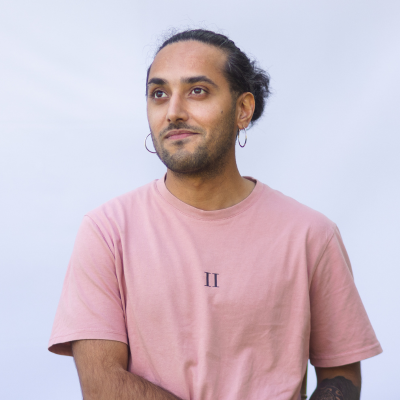
Gurden Batra
Gurden is the Civic Tech Lead at Dark Matter Labs. Over the past five years, he has led the development of civic tools including CircuLaw, a legal registry for circular economy transitions with the City of Amsterdam and TreesAI, which models urban forestry as civic infrastructure for cities like Berlin, London, Glasgow, and Canadian municipalities. He has shaped Dark Matter Labs' digital identity, communications, and internal tech and tools practice. With a background in Computer Science from Georgia Tech and New Media Design from Aalto University, Gurden bridges governance innovation and implementation, turning systemic frameworks into things people can actually use.
Dr Julia Ebner
Dr Julia Ebner is an international expert on online radicalisation, disinformation and threats to democracy. She leads the Violent Extremism Lab at the University of Oxford and is Co-Executive Director at the Institute for Strategic Dialogue (Berlin), where she oversees research, policy and action programmes on digital threats to democracy. She has given evidence to various governments, including on AI-fuelled disinformation, advised the intelligence community, and worked with the UN, Europol and NATO. Julia is the award-winning author of The Rage, Going Dark and Going Mainstream. She regularly writes for outlets such as The Guardian, Financial Times and Süddeutsche Zeitung, contributes to broadcast media, and delivers guest lectures and public talks at universities and schools. Julia holds a DPhil in Anthropology from the University of Oxford and has over a decade of experience working at the intersection of research, policy and practice.

Ramak Molavi Vasse'i
Ramak Molavi Vasse'i (The Law Technologist) is a digital rights advocate and independent AI researcher. She is Head of Advocacy at the Center for Digital Rights and Democracy, a visiting lecturer at the University of Potsdam, and an advisor on AI regulation and governance. She has led research projects, including the Meaningful AI Transparency project at Mozilla from 2021 to 2024. Her research and regular publications focus on AI Ethics & Governance, Privacy and Data Protection, and the foresight regulation of emerging technologies.
In 2023, she was recognized as one of the 100 Brilliant Women in AI Ethics. Her interdisciplinary work is dedicated to the development of sustainable and public good-oriented technologies.
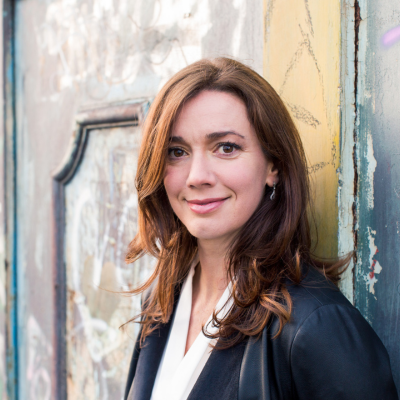
Stephanie Hare
Dr Stephanie Hare is a researcher, broadcaster and author focused on technology, politics and history.
She co-presents “Artificial Intelligence: Decoded” on BBC television and contributes to the BBC World Service.
Her first book, Technology Is Not Neutral: A Short Guide to Technology Ethics, was named a Financial Times Best Technology Book of summer 2022, and her writing has featured in the Financial Times, The Washington Post, the Guardian/Observer, the Harvard Business Review, WIRED and Computer Weekly.
She has worked at Accenture, Palantir, and Oxford Analytica; held the Alistair Horne Visiting Fellowship at St Antony’s College, Oxford; and earned a PhD and MSc from the London School of Economics and Political Science (LSE) and a BA from the University of Illinois at Urbana-Champaign, including a year at the Université de la Sorbonne (Paris IV).

Robin Frasch
Robin is the Co-Founder and CEO of wahl.chat, a non-profit civic tech initiative that develops AI-powered tools to make politics more accessible and easier to understand. The project’s mission is to lower informational barriers to democratic participation by translating complex political content into clear, user-friendly explanations designed around real accessibility needs. Through this work, Robin and his team aim to enable more people to engage with political information and confidently participate in democratic processes.
Alongside this work, Robin is a PhD researcher at the University of Hamburg. His research explores how AI can help citizens navigate large amounts of complex information, with a particular focus on the political sphere and voting advice applications. He studies how these tools can support not only access to information, but also reflection and more conscious and informed democratic participation.

Olivia Lazard
Olivia Lazard is a strategic consultant, researcher, and public speaker focused on the intersections between international and planetary security. Her work anticipates the geopolitical, economic, and ecological risks driven by planetary transformations such as climate change. She advises governments, international organizations, and private sector actors on managing transition risks related to energy systems, technological disruption, and ecological collapse. Her research also contributes to shaping public debate and governance on emerging planetary technologies, including geoengineering.
Olivia began her career in conflict zones across Africa and the Middle East, working for the UN, donor governments, and business actors as a conflict analyst, stabilization advisor, and mediator. There, she witnessed firsthand how ecological degradation, nature-based conflict, illicit economies, and geostrategic competition over critical minerals, water, and soil were converging—reshaping both the planet and international systems. As she emphasized in her 2022 TED Talk, this convergence is accelerating faster than existing peace and security frameworks can adapt.
Today, Olivia works at the nexus of fieldwork, systems research, and policy design. She collaborates with scientists and policymakers to protect and regenerate ecosystems amid rising transition risks, and pilots regeneration-based mediation approaches in climate-vulnerable regions to help communities and governments reimagine water, food, and energy futures.
As a Planetary Fellow at the Berggruen Institute, Olivia is writing a book on the drivers of human and planetary insecurity in the age of the techno-industrial revolution. She is also founding Transition Intelligence, a European institute dedicated to guiding planetary transitions through policy, technological, economic, and mediation innovation labs.
Olivia holds a BA from McGill University, an MA from Sciences Po Paris, and an MSC from the London School of Economics. Most recently, she was a senior fellow with Carnegie Europe, advancing research on the geopolitics of climate change and transition risks. She is based in Europe, and speaks French, English, Spanish and Italian.
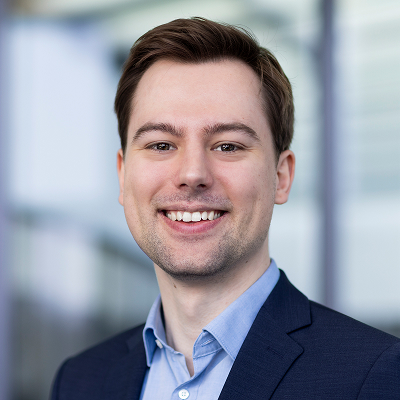
Niclas Böhmer
Niclas Böhmer is an Assistant Professor for Algorithmic Decision Making and Society at the Hasso Plattner Institute (HPI), University of Potsdam. His research explores how algorithms can help groups make provably fair and transparent decisions. More broadly, he works at the intersection of AI, democracy, and economics, focusing on how algorithmic tools can help society make better collective choices. Before joining the HPI, Niclas was a postdoctoral researcher at Harvard University, where he worked on AI for Social Good, and he received his PhD in theoretical computer science from TU Berlin.
Dimitris Dimitriadis
Dimitris Dimitriadis is a futurist and AI entrepreneur who has spent his career asking one question: what does it mean to build technology that genuinely serves humanity? Founder of Cogniveil.ai and Author of "2049 Instructions for the Futures of Humanity (2023)" and the revised edition "2049: A Manual for a Hopeful Intelligence Age (2026)", he has spoken in 74 countries and advised Fortune 500 companies and institutions ranging from the European Commission to the U.S. Department of State. For the past twelve years, he has been quietly training a personal AI model to advise his niece when he is no longer around; a reminder that the most powerful use of technology is not disruption, but the transmission of wisdom across generations.

Alex Forrest Whiting
Alex Forrest Whiting is a British journalist based in Berlin, where she has worked for Germany’s international broadcaster, Deutsche Welle, since 2018. She hosts DW's breaking news livestreams - covering major international stories across TV, YouTube and TikTok - and serves as a senior editor across the network's digital platforms. She’s DW’s go-to person for British politics and current affairs. Alex also trains journalists in digital writing, editing and presentation.
Alex began her career at the BBC before becoming Presenter and Political Correspondent for ITV News based in Westminster. She reported live from Parliament and Downing Street on elections, budgets, leadership contests and Prime Minister's Questions. She also interviewed senior politicians including serving Prime Ministers.
Before Berlin, Alex reported from Copenhagen for BBC World and Al Jazeera English.
Alongside her work at DW, Alex moderates high-profile public events in London and Berlin.
.webp)
Event Hosts
The Conduit Foundation catalyses collaborative solutions to the world’s most complex challenges by widening participation in problem-solving, channelling funding toward high-impact initiatives and enabling cross-sector dialogue. It works in close partnership with The Conduit, a global community of changemakers committed to creating a just and sustainable future.
All images are kindly provided by Studio Kroll.
The Conduit Foundation is a registered charity in England and Wales (charity no. 1135264) and a company limited by guarantee (company no. 07109988), registered at 9 Bonhill Street, London, England, EC2A 4DJ.
Let’s solve big challenges together
To support the Foundation or find out more, please contact